Locating an authoritative pest control service in Sioux City resolves active biological contamination caused by wood-destroying organisms, seasonal perimeter invaders, and disease-carrying rodents. Technicians apply targeted exterior perimeter barriers, attic dusting, subfloor injections, and mechanical hardware exclusion across Woodbury County properties to restore indoor sanitation without unnecessary broadcast spraying.
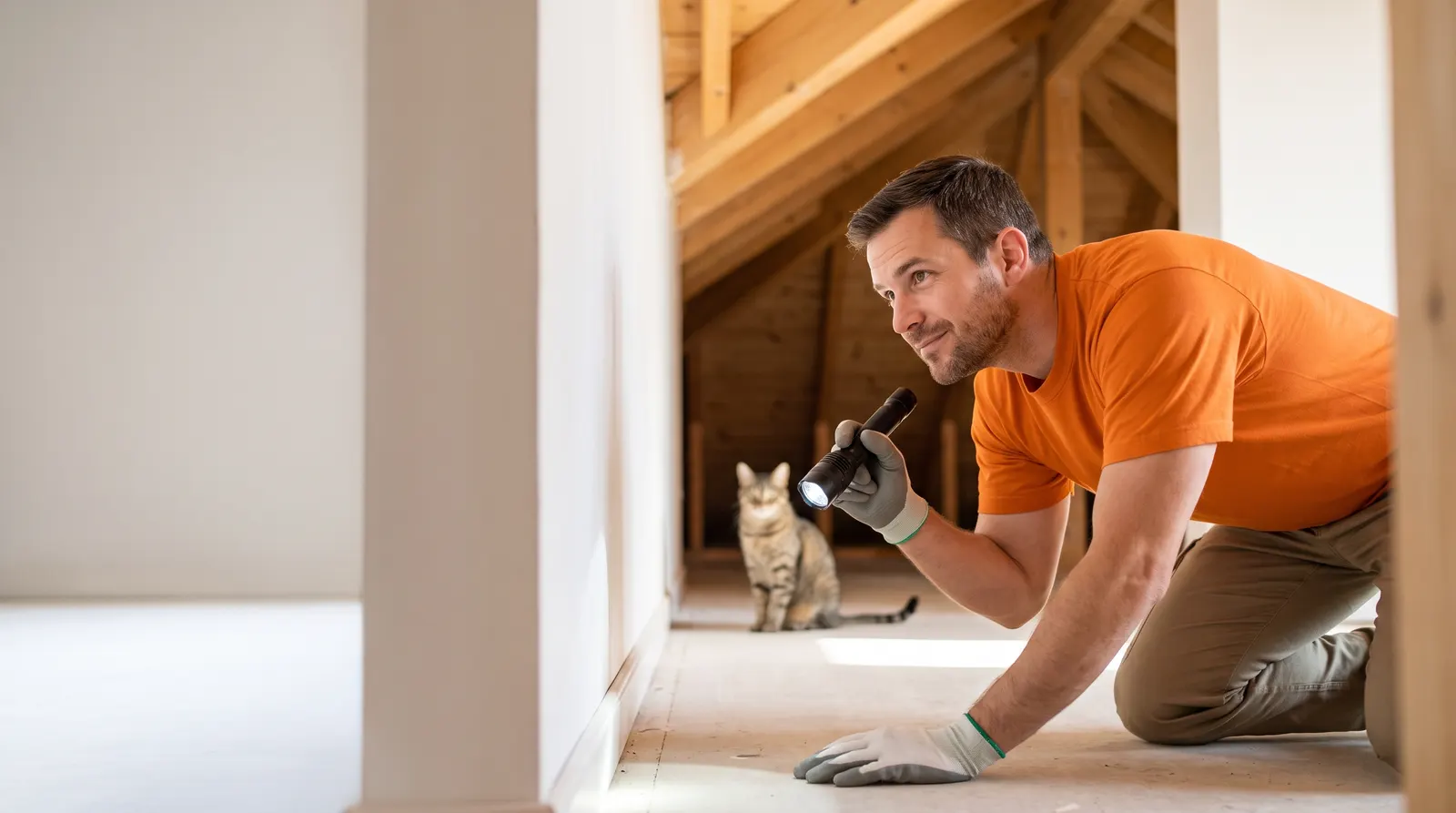
Pest Control Service in Sioux City is a specialized structural inspection, targeted mechanical exclusion, and species-specific extermination process designed to eliminate active insect and vertebrate infestations from Woodbury County residential and commercial buildings.
Every service reflects the same meticulous attention to detail, whether it's a single job or a larger pest control service project across Sioux City.
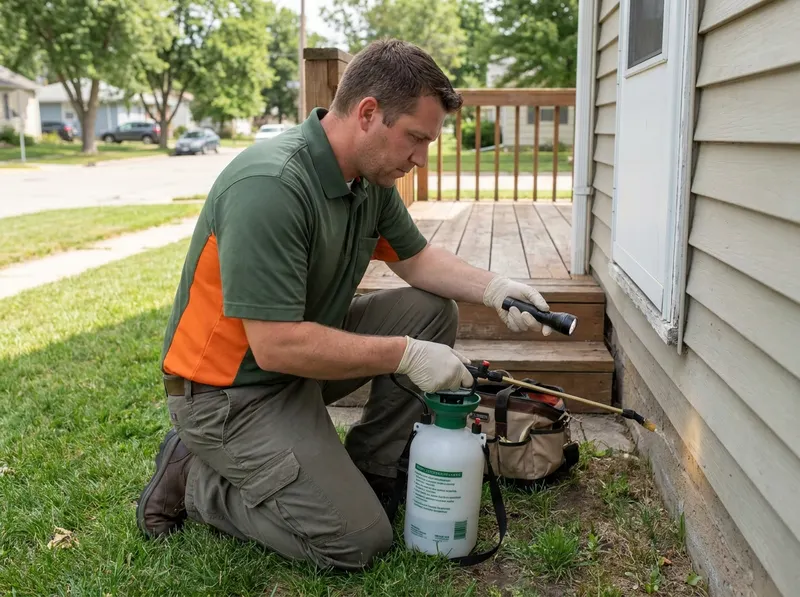
Residential pest management establishes a fortified defensive perimeter around single-family residences, duplexes, and townhomes using species-specific Integrated Pest Management protocols. Technicians perform an exhaustive baseline inspection of basement rim joists, sub-slab foundations, plumbing chases, and attic insulation zones to identify active harborages of silverfish, centipedes, and earwigs. Remediation combines micro-droplet gel baiting inside utility voids with an exterior liquid barrier applied 3 feet upward onto the foundation wall and 5 feet outward onto perimeter soils. This exterior treatment creates a non-repellent protective boundary that intercepts perimeter invaders before they access finished living areas, protecting food storage and bedroom spaces without indiscriminate indoor broadcast spraying.
Get a quote →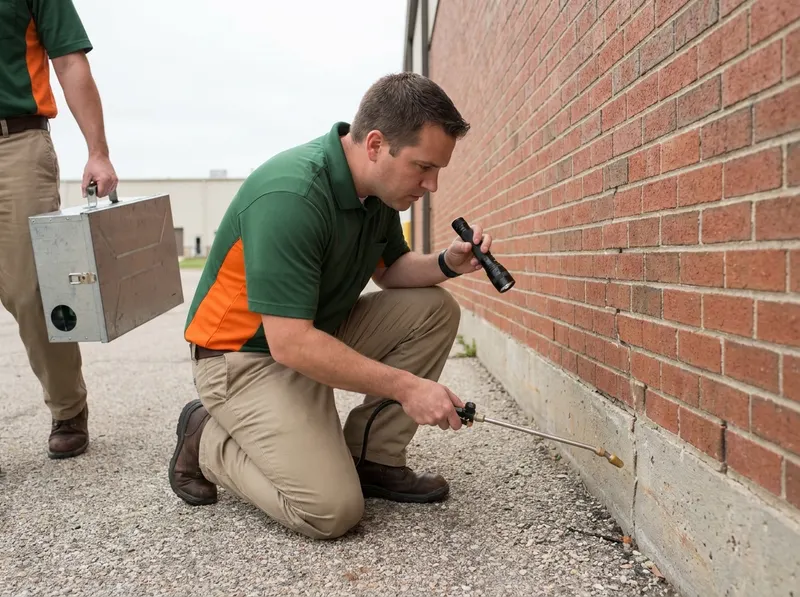
Commercial pest management delivers documentation-heavy, regulatory-compliant Integrated Pest Management for food processing plants, healthcare environments, multi-family housing communities, distribution hubs, and commercial offices. Service protocols include the strategic deployment and barcode scanning of tamper-resistant exterior rodent monitoring stations, non-chemical insect light traps, and pheromone monitoring arrays positioned according to Woodbury County Environmental Health guidelines. Detailed reporting tracks pest population trends, sanitary vulnerabilities, and structural defects across loading docks, trash compactors, and commercial kitchen facilities. All product selections prioritize zero-volatility active ingredients to maintain sanitation standards without interrupting shift work or commercial logistics.
Get a quote →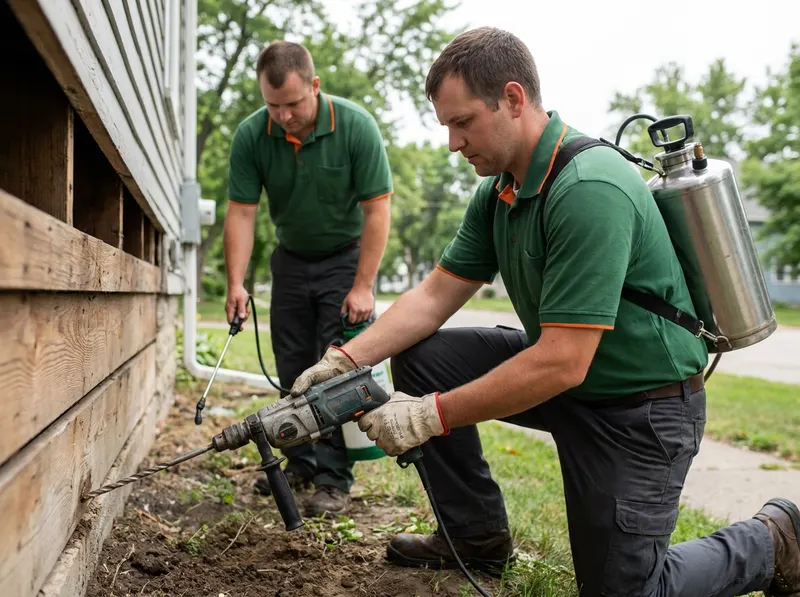
Subterranean termite control neutralizes destructive Eastern subterranean termite (Reticulitermes flavipes) colonies that excavate structural mud tubes along foundation footings, sill plates, and support joists. Eradication combines deep hydraulic soil rod-injection along exterior foundation perimeters with strategic sub-slab drilling through basement slabs and garage floors to establish a continuous non-repellent chemical barrier. Undetectable liquid termiticides adhere to foraging workers, who systematically transfer the lethal compound back to the subterranean nest via social grooming, causing total colony elimination within 60 to 90 days. For sensitive landscapes, exterior in-ground termite baiting stations placed at 10 to 15-foot intervals provide continuous monitoring and targeted population suppression without high-volume liquid displacement.
Get a quote →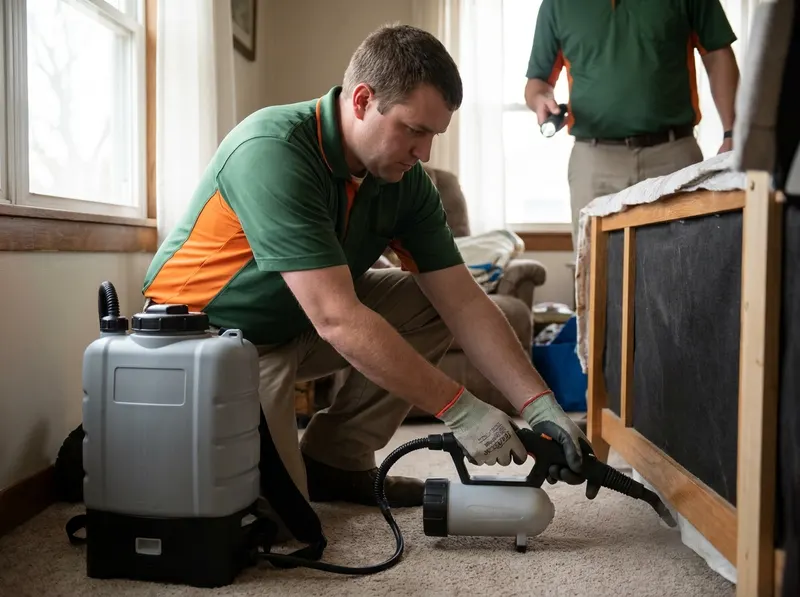
Bed bug remediation delivers definitive multi-room eradication of Cimex lectularius populations across mattresses, tufted headboards, baseboard crevices, nightstands, and wall electrical switchplates. Protocols utilize industrial convective heat trailers and circulating fans that safely raise internal room temperatures between 122°F and 135°F, sustaining this critical thermal threshold for a minimum of 4 hours to eliminate all life stages, including embryonic eggs, nymphs, and feeding adults. For structures unsuitable for thermal heating, technicians apply precision superheated dry steam exceeding 180°F directly to furniture seams and perimeter tack strips, complemented by long-lasting amorphous silica desiccant dust injected into interior wall voids to physically dehydrate escaping insects.
Get a quote →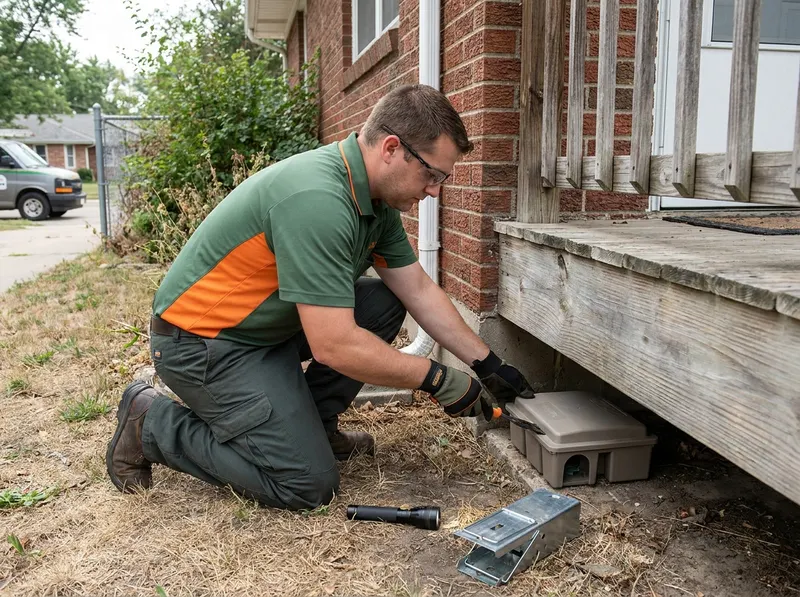
Rodent abatement eliminates established populations of Norway rats (Rattus norvegicus), roof rats (Rattus rattus), and white-footed or deer mice (Peromyscus maniculatus) from basements, crawlspaces, drop ceilings, and attic assemblies. The remediation sequence begins with internal diagnostic mapping using non-toxic tracking powders and high-tension snap-traps positioned along structural travel runs. Concurrently, technicians perform mechanical exclusion across the building envelope, sealing all exterior utility line gaps, crawlspace foundation vents, and architectural corners with 0.25-inch galvanized steel hardware cloth and copper mesh backer rod. Exterior tamper-resistant bait stations loaded with anticoagulant or neurotoxin blocks suppress exterior population pressure to prevent seasonal structural reinvasion.
Get a quote →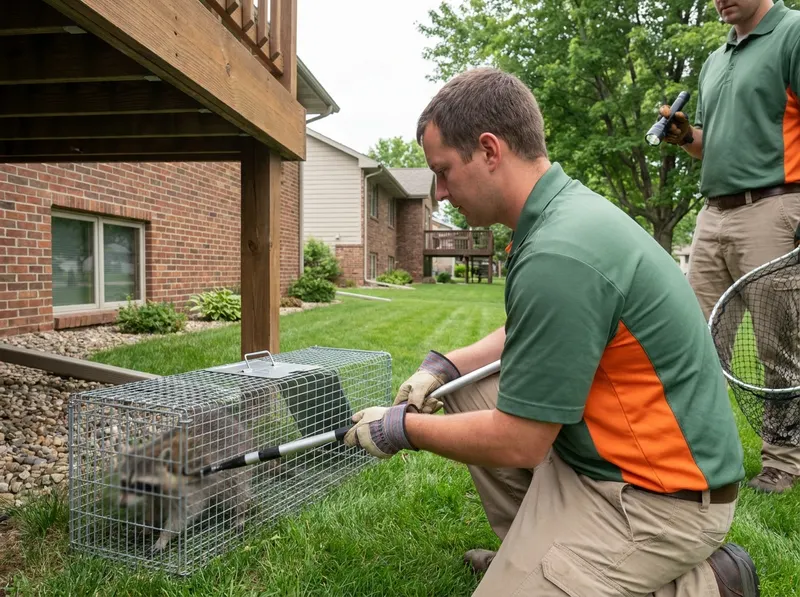
Nuisance wildlife management humanely evicts raccoons (Procyon lotor), striped skunks (Mephitis mephitis), Virginia opossums, and tree squirrels that damage residential attics, crawlspaces, and chimney flues. Technicians conduct an exterior architectural survey to locate primary entry breaches, chew marks, and compromised soffit intersections. Eviction protocols employ spring-loaded heavy-gauge capture cages or tension-mounted one-way exclusion funnels that permit animals to exit the structure to forage while permanently preventing re-entry. Once biological vacancy is verified through motion cameras and physical checks, technicians install heavy-duty galvanized wire mesh, custom aluminum fascia metal, and steel chimney spark arrestors to fortify damaged entry points.
Get a quote →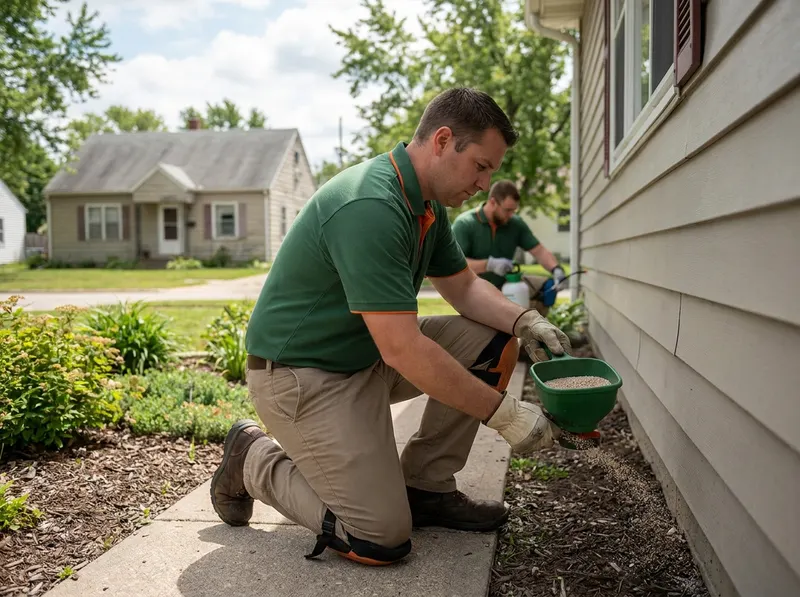
Ant management stops destructive wood-nesting black carpenter ants (Camponotus pennsylvanicus) along with aggressive foraging colonies of odorous house ants, pavement ants, and pharaoh ants. Treatments bypass surface-killing sprays that cause ant colonies to undergo rapid survival budding. Instead, technicians deploy carbohydrate and lipid gel bait matrices formulated with slow-acting active ingredients such as indoxacarb or fipronil along active indoor and outdoor pheromone trails. Worker ants consume the matrix and transport it into internal wall cavities, hollow core doors, and exterior tree stumps, feeding the reproductive queens and developing larvae. Structural satellite nests are treated via direct wall void micro-injections using non-repellent botanical or synthetic dusts.
Get a quote →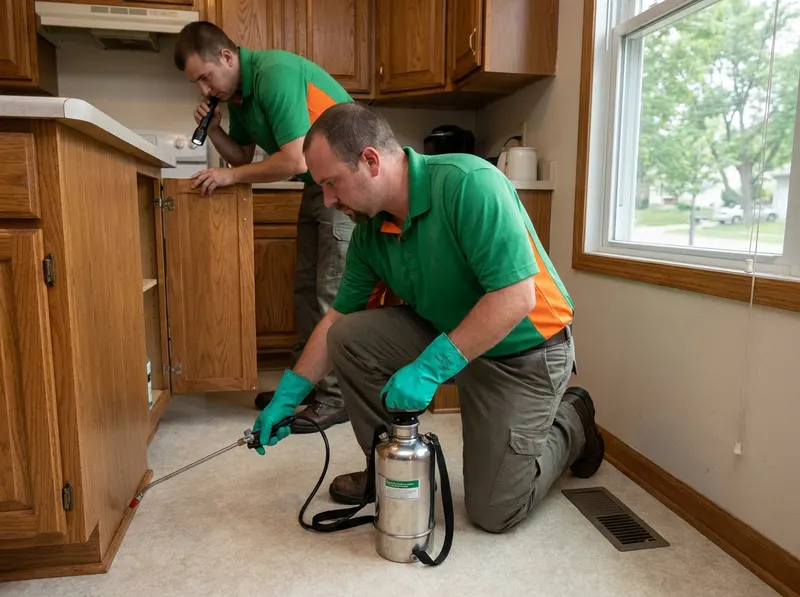
Cockroach management eradicates indoor infestations of German cockroaches (Blattella germanica) as well as damp-environment Oriental and American cockroaches inhabiting floor drains, utility vaults, and boiler rooms. Eradication begins with species-specific flushing inspections using endoscopes behind commercial kitchen line equipment, beneath refrigeration drip pans, and inside cabinet joinery. Remediation utilizes an alternating matrix of lipid-rich rotation gel baits paired with juvenile hormone mimic insect growth regulators (IGRs). The IGRs inhibit the synthesis of chitin, sterilizing reproducing females and preventing developing nymphs from successfully molting, while the bait matrices eliminate existing feeding populations within hidden harborage zones.
Get a quote →You get a firm, itemized quote for your pest control service before any work begins, no surprises, no pressure.
Careful prep, tidy work, and a full cleanup when we are done. We treat your home and belongings like our own.
The same trusted, background-checked team from the first call to the final check.
Selecting the correct structural treatment program depends on the pest biology, colonization depth, and building construction. If an infestation involves localized nuisance invaders like odorous house ants or field crickets, select a targeted perimeter exterior barrier combined with gel baits along utility chases; this restricts synthetic chemical application strictly to transit points without requiring indoor family disruption. If wood-destroying insects such as subterranean termites breach a structural sill plate or foundation header, choose localized non-repellent liquid soil injections or installed subfloor bait monitoring arrays; this delivers undetectable active ingredients directly back to the subterranean colony rather than merely halting visible workers at the surface.
If bed bugs occupy multiple rooms across mattresses, baseboards, and wall voids, choose a whole-structure thermal remediation treatment supplemented with micro-encapsulated desiccant dust rather than repeated spot-spray visits; thermal remediation elevates ambient core temperatures to 122°F for over three hours, penetrating wall cavities to eliminate all life cycles including heat-resistant egg casings in a single treatment. If rodents like Norway rats or deer mice enter crawlspaces or attics, prioritize heavy gauge galvanized mesh mechanical exclusion paired with closed-box tamper-resistant bait stations over open rodenticide placement; mechanical exclusion permanently blocks access along sill plates and weep screeds, preventing recurring seasonal migration when river valley temperatures plunge in October. If German cockroaches colonize commercial kitchens or residential appliances, select insect growth regulator (IGR) bait rotations applied in localized micro-droplets rather than high-pressure space sprays; the IGR halts chitin synthesis and prevents nymphs from maturing into reproductive adults while avoiding the chemical displacement that drives populations deeper into structural drywall voids.
If nuisance wildlife such as raccoons or gray squirrels enter soffits or attics, choose directional one-way eviction doors combined with heavy-gauge galvanized roof flashing rather than unbaited live traps; one-way doors allow target wildlife to exit toward foraging grounds while permanently denying structural re-entry. The trade-off between targeted spot interventions and whole-structure exclusion programs is initial equipment deployment expense and prep labor versus long-term recurrence prevention. Targeted spot treatments carry lower immediate entry fees starting at the $250 visit baseline, but lack the structural defense necessary to stop future biological migration through unsealed construction gaps.
Whole-structure exclusion and remediation programs require comprehensive preparatory effort and higher upfront capital investment, but they permanently resolve structural vulnerability and eliminate dependency on endless recurring chemical application.
Every project gets a firm, written price after a free on-site visit. Ranges below for orientation.
Tell us about your pest control service job and we'll send a clear, written quote, usually the same day. Or just call and talk to a real Sioux City pro.
(712) 717-0046
Properties throughout Sioux City face specific biological pest pressures driven by the Missouri River and Big Sioux River floodplains alongside the windblown loess hills terrain. Structural soil shifting in areas near Stone State Park, Grandview Park, and the loess bluffs above Riverside frequently causes basement foundation hairline fractures exceeding 0.0625 inches, creating direct subterranean transit lanes for Odorous House Ants and Reticulitermes termites seeking shelter from fluctuating water tables. In dense residential areas like Morningside, Leeds, and the Northside, late-fall temperature drops in October regularly push Norway rats and white-footed mice out of river bank brush corridors, Perry Creek drainages, and railway rights-of-way directly into residential crawlspaces along floor drains and utility penetrations. Older architectural construction in neighborhoods such as Rose Hill, Greenville, and The North End features unsealed fieldstone basements and dimensional wood framing that provide expansive transit corridors for brown recluse spiders, boxelder bugs, and overwintering Asian lady beetles seeking warmth inside attic soffits.
Free estimates for Sioux City & the surrounding area.
 Roventra Pest Solutions