Targeted wildlife control resolves the distinct structural threats caused by wood-boring rodents and nesting mammals without indiscriminate poison distribution. In mature residential areas like Morningside, Indian…
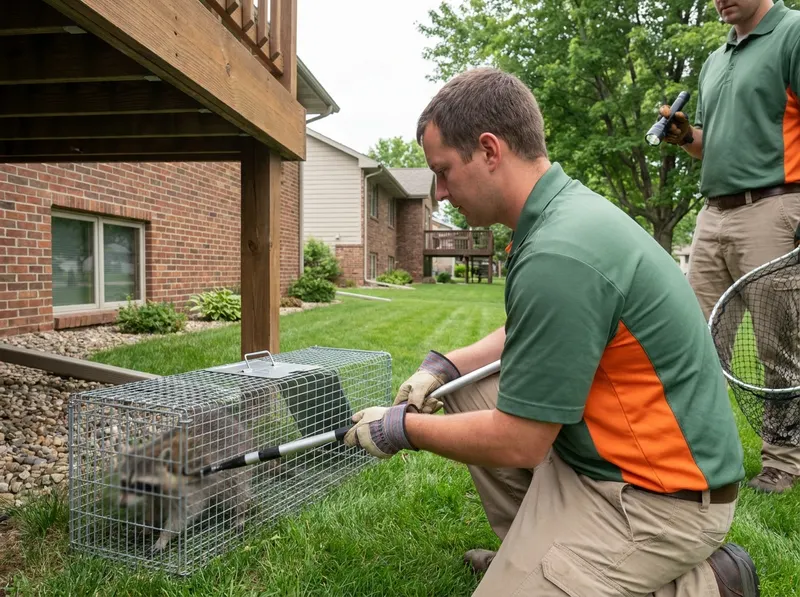
Targeted wildlife control resolves the distinct structural threats caused by wood-boring rodents and nesting mammals without indiscriminate poison distribution. In mature residential areas like Morningside, Indian Hills, and the Grandview Park corridor, eastern gray squirrels and raccoons exploit warped fascia boards, rotted soffits, and gable louvers to access warm cellulose attic insulation. Left unchecked, wildlife gnaws electrical copper wiring, tears through flexible HVAC ducting, and soils fiberglass batting with toxic urine and biological pathogens. Standard extermination practices relying on broadcast chemical applications fail against larger vertebrate intruders; humane resolving protocols demand physical trapping, biohazard containment, and engineered physical barricades.
Decision guidance relies on identifying the exact acoustic patterns and entry structural boundaries. If nocturnal scratching occurs steadily overhead between 10 PM and 4 AM, homeowners are generally dealing with raccoons or bats; diurnal scurrying at dawn and dusk points toward squirrels. Skunks and opossums, common along lower-elevation properties near Greenville, Riverside, and the Loess Hills margins of Stone State Park, dig extensive den networks beneath concrete steps, front porches, and exterior slabs. Choosing live trapping paired with complete exclusion stops recurring migrations. Trapping an animal without reinforcing the entry point simply leaves a vacant scent path for the next roving mammal to re-occupy.
Exclusion execution involves sealing entry voids with 1/4-inch to 1/2-inch galvanized steel hardware cloth, high-density metal flashing, and structural sealants that resist mammal incisors. Iowa Department of Natural Resources regulations govern wildlife handling and native species relocations, particularly during seasonal maternity periods when flightless young occupy nursery dens. If an active nesting pocket contains dependent kits, spring one-way exclusion funnels give nursing mothers an exit route while blocking re-entry, preventing dead animals inside drywall cavities. Licensed technicians conduct the preliminary attic and foundation evaluation to establish species presence, confirm structural damage levels, and submit an unhedged estimate before mechanical work begins.
Every job gets a firm, written price after a free on-site visit.
Tell us about your wildlife removal job in Sioux City and we'll send a clear, written quote, usually the same day.
 Roventra Pest Solutions